Smart Sayings
Dozens of smart sayings in graphical squares.
things worth paying attention to
Dozens of smart sayings in graphical squares.
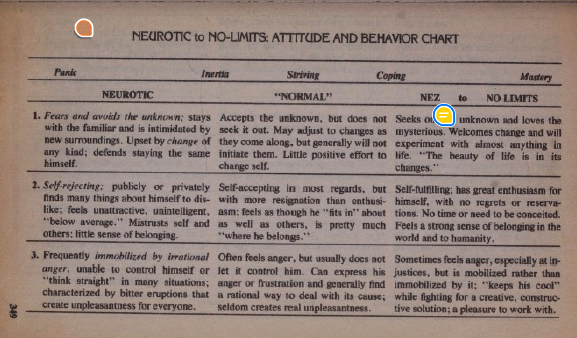
Neurotic to No-Limit: Attitude & Behavior Chart. From “The Sky’s the Limit” by Wayne Dyer. Copyright 1980 Wayne W. Dyer. NEZ means No Erroneous Zones.
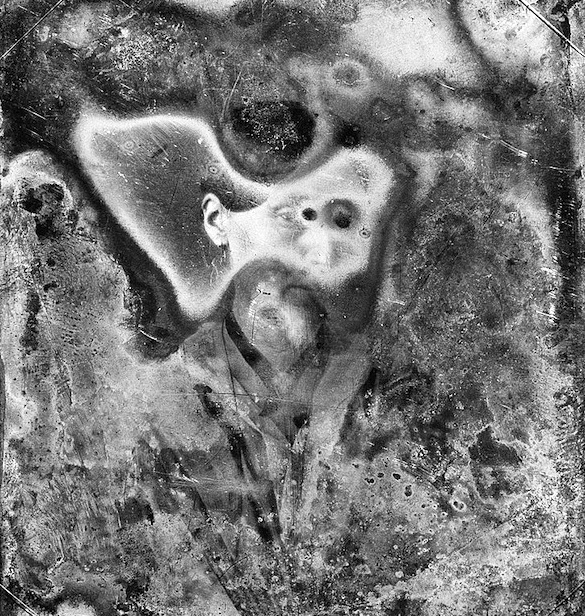
Images of decaying daguerreotypes from Mathew Brady’s NYC Studio, circa 1850.
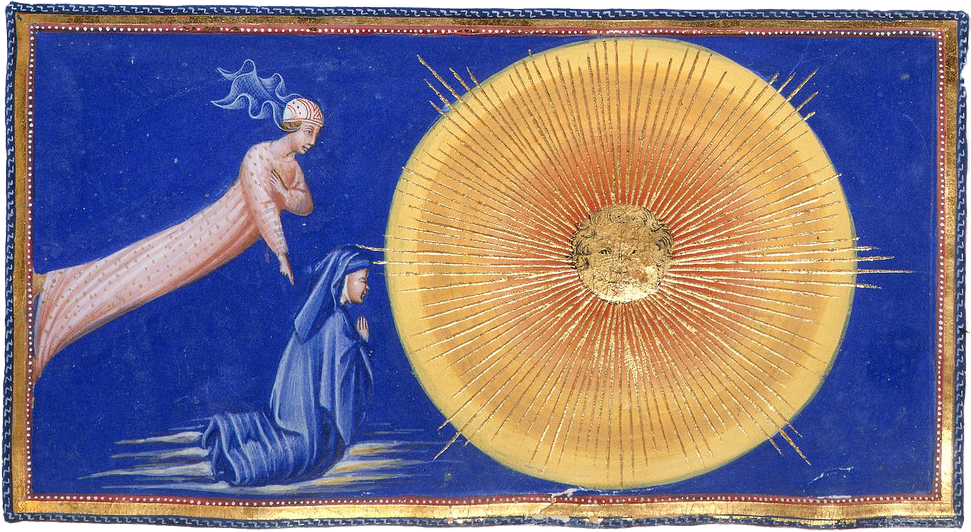
These illustrations from a 15th-century book show various areas of hell, purgatory, and heaven, based on Dante’s musings in The Divine Comedy. Hell and purgatory were painted by Priamo della Quercia, and Giovanni di Paoli di Grazia did heaven.
If you need, or just want, 14th-century images of grunty or otherwise irritated creatures, you’ve come to the right place.
Folk legends surround the life of Old West Outlaw Jesse James. Once, it has been told, while Jesse and his brother Frank were riding in the foothills of the Ozark Mountains with the Younger brothers, they stopped at a small, out—of—the—way cabin to ask for food. The sole occupant of the house was a poor, saddened woman whose husband had recently passed away. Overcoming any apprehension, the woman kindly agreed to throw some scraps together and feed the strangers. Once inside, however, Jesse sensed that something terrible was troubling the widow….
It was here [Budapest] that I suffered the complete breakdown of the nerves to which I have referred. What I experienced during the period of that illness surpasses all belief. My sight and hearing were always extraordinary. I could clearly discern objects in the distance when others saw no trace of them. Several times in my boyhood I saved the houses of our neighbors from fire by hearing the faint crackling sounds which did not disturb their sleep, and calling for help. In 1899, when I was past forty and carrying on my experiments in Colorado, I could hear very distinctly thunderclaps at a distance of 550 miles. The limit of audition for my young assistants was scarcely more than 150 miles. My ear was thus over thirteen times more sensitive. Yet at that time I was, so to speak, stone deaf in comparison with the acuteness of my hearing while under the nervous strain….
I once dated a cute guy in high school who served me spaghetti by candlelight and taught me to play Frisbee. He was a great kisser. He was good at French and geometry. But I had to break up with him because he liked the rock band Journey. Plus, he wore a puka shell necklace. In college, I dated a gorgeous Rhodes scholar who spent his summers distributing sacks of grain to starving children in Africa. He took me to wine tastings and the opera. But I had to break up with him because his name was Yehuda. Imagine having sex with someone and screaming, “Oh, do me, Yehuda.” Just not possible. After college, I had to break up with a civil rights lawyer because he had a mullet….
The only recurrence of the temperamental joyance that was a large part of his nature was when he related the Spray’s experiences. For no sadness of soul could ever rob Jack London of his native delight in a boat. In relation to this very trip, I am tempted to quote from “Small-Boat Sailing” (in The Human Drift): “After all,” he says, “the mishaps are almost the best part of small-boat sailing….”
My second term at Normandale, at Bexhill-on-Sea, proved to be my last there. I had been sent there as a boarder, at the age of six, shortly after my mother had married David Stiven; and I was blissfully happy, being by far the youngest boy in the school and, consequently, much fussed over. But when the summer term ended I found myself spending a dreary, lonely August holiday confined to a rather gloomy London hotel in the Cromwell Road….
In the Long Ago, when people lighted the dark winter nights with tallow candles, a candle shop stood by the side of a brook. There was a great set kettle for trying out, a heavy iron press and leaden moulds. Altogether, it was a pretty greasy place, with piles of fresh tallow leaves, great “cheeses” of scraps, barrels of prepared tallow, and boxes of candles ready for market, and the fall and winter birds evidently thought it a feast provided by the gods for their delectation.
The presiding genius of the shop — David, the Candlemaker — was an uncouth man, but he had a big heart and a warm love for the sweet things of nature, especially birds, and they seemed to know it. How they took possession and over-ran the place!…
Born in 1688, Emanuel Swedenborg began his career by mastering all the sciences of his day. Still judged by many to have possessed more factual information than any other person in history, he wrote 150 scientific works in chemistry, physics, mineralogy, geology, paleontology, anatomy, physiology, astronomy, optics and so forth. These contained many original discoveries: he described the function of the ductless glands and the cerebellum; he originated the nebular hypothesis of the solar system; he suggested the particle structure of magnets….
Dear Godwin, —
The punch, after the wine, made me tipsy last night. This I mention, not that my head aches, or that I felt, after I quitted you, any unpleasantness or titubancy; but because tipsiness has, and has always, one unpleasant effect — that of making me talk very extravagantly; and as, when sober, I talk extravagantly enough for any common tipsiness, it becomes a matter of nicety in discrimination to know when I am or am not affected….
We soon came to the house we were looking for, by far the most impressive structure in the whole village. From the outside it looked decidedly gloomy with its blackened walls, narrow barred windows, and all the marks of long neglect. It had been the home of a titled family which had gone away long ago; then it had served as a barracks for the carabinieri until they had moved to their newly-built modern headquarters, and the filth and squalor of the walls inside still bore witness to its military occupation.
Harry Parr-Davies was an accompanist for Gracie Fields and writer of some of her most famous songs, among them the World War II classic ‘Wish Me Luck as You Wave Me Goodbye’. Alas, on a 1939 Atlantic crossing on the Queen Mary with Fields, Parr-Davies appeared to run clean out of luck, possibly while waving someone goodbye, when his glasses fell overboard. He was too short-sighted to read music without them, and in some embarrassment went to report his mishap to Fields.
…And the stories about my father grew steadily worse. Some were altogether incredible, yet were continually being repeated. One of them was so bad I was nearly distracted about it. Mr. and Mrs. John Connett, true friends of my father in Pittsfield, came round to his office one day and repeated it to him sympathetically and with the assurance that they and their friends were going to do the best they could to “nail that lie.” With such a story circulating — i.e., that Father was going demented and, under the delusion that insects were crawling around in everybody’s wounds or inwards, was poisoning and killing his patients wholesale in the endeavor to poison and kill out the cockroaches, tumble-bugs, etc., was it any wonder that my father’s practice suffered?
Sarah’s malady was still a mystery, yet that October she was discharged from the asylum and listed as “Recovered.” Clara rented a furnished room for them, and when Johnny Bennett visited her there, she told him that her mother had been on location with her in New Bedford. No mention of an asylum was made.
In an American paper I find this anecdote: “An old lady was being shown the spot on which a hero fell. ‘I don’t wonder,’ she replied. ‘It’s so slippery I nearly fell there myself.'”
Now that story, which is very old in England, and is familiar here to most adult persons, is usually told of Nelson and the Victory. Indeed it is such a commonplace with facetious visitors to that vessel that the wiser of the guides are at pains to get in with it first. But in America it may be fresh and beginning a new lease of life; it will probably go on forever in all English-speaking countries, on each occasion of its recrudescence finding a few people to whom it is new….
She had no sooner disembarked at Aspinwall [Panama] [in 1864] than she set out to find the cemetery where she imagined George Marshall was buried. Without worrying about her trunks, which had been piled on top of each other at random, without haggling over a high-priced room, Fanny set off down the main street, threading her way, her daughter in tow, between the slums and brothels, the billiard parlors and gambling dens. Then she crossed the iron track along the seafront and the sheds where rows of bananas, coconuts, heaps of coral, and vegetable ivory awaited shipment to New York, baking under roofs of corrugated metal.
I worked for my brother from August 1899, to March, 1901, at $16 a month, making $304, of which I spent only $12 in that time, as I had clothes. On the first day of March I went to a farm that I had bought for $150, paying $50 down. It was a bush farm, ten miles from my brother’s place and seven miles from the nearest crossroads store. A man had owned it and cleared two acres, and then fallen sick and the storekeeper got it for a debt and sold it to me. My brother heard of it and advised me to buy it….