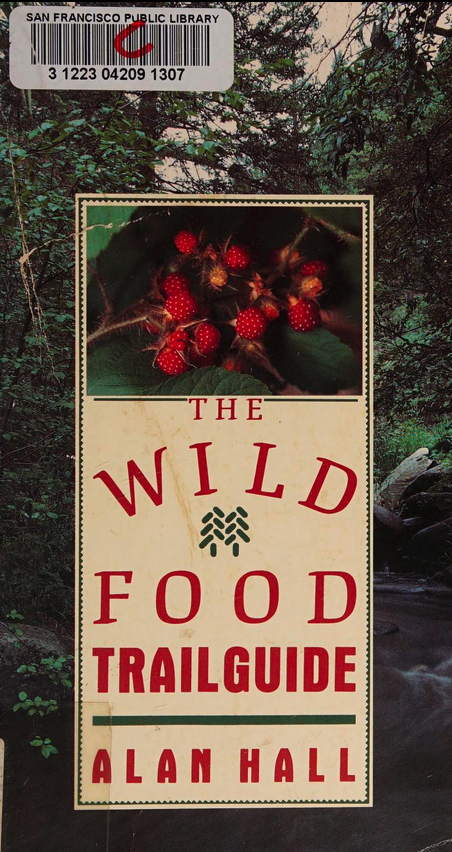
Read free. The Wild Food Trailguide, by Alan Hall, 1976.
Excerpt
Even when survival is not at stake, a knowledge of wild food plants can contribute immeasurably to the enjoyment of nature; it can provide the camper with relief from boring prepack- aged meals and with the gratification that he can live in the wilderness by his wits rather than by the strength of his back and the contents of his pack. The casual hiker, biker, or walker can add zest to trail lunches and anyone can add to his culinary repertoire a list of delicacies that are unavailable commercially.
But the best reason for eating wild plants is that they are just plain good. This is not to say that everyone will like everything he tries anymore than everyone likes every cultivated vegeta- ble, but almost everyone is certain to discover a few foods he prefers to any cultivated vegetable he has tasted. In many cases, edible plants in this book are the ancestors of cultivated varieties that have been selectively bred by growers; the Wild Onion is an example. Other wild plants (Water Cress, for one) have escaped from cultivation; some (Salsify, for example) were once extensively cultivated but for inexplicable reasons fell into disuse. And still others (like Wild Rice) are of superior quality but have resisted attempts at cultivation.
In terms of nutritional value, wild plants generally come out ahead of their garden-variety relatives. In fact, a great deal of the medicinal value originally associated with many wild plants was due simply to their high vitamin content, which cured the vitamin-deficiency diseases that were so widespread in the past when green vegetables were not normally available during the winter months. These perfectly effective cures were in general use hundreds of years before vitamins were “discovered.” Dandelion greens, for instance, have almost twice the vitamin A content of spinach; the young shoots of Pokeweed contain almost three times the vitamin C of oranges; and the leaves of Lamb’s Quarters have three times the calcium of spinach leaves.
Learning to identify edible plants is no harder than learning to recognize other people. Like people, plants have characteristics that are similar to those found in human races, families, and individuals. With a little practice, an amateur can learn to spot specific plants in what at first looks like a confusing mass of leaves, stems, flowers, and seeds. True, there are poisonous plants, but their number is limited and, of these, very few are deadly. Perhaps most important, fewer still can be confused with edible varieties, and if care is taken in identifying the plants, all can be readily distinguished.
This book is designed to enable the amateur plant hunter to make accurate and certain identifications of edible plants. The 85 plants that are covered were selected because they can be easily recognized, can supply a wide range of food products throughout the year (although the pickings are necessarily somewhat leaner in the winter months), and can be found over broad sections of the U.S. and southern Canada. These 85 plants alone provide 28 different salad greens, 18 cooked vegetables, 8 substitutes for potatoes, 18 sources of flour, 5 cooking oils and butters, 21 cold beverages, 23 substitutes for coffee and tea, and 7 sources of sugar as well as numerous potherbs, fruits, confections, jams and jellies, pies, vinegars, and even salt.
Introductory Pages
Related Posts

Agricultural Engineering

Beginners’ Botany